
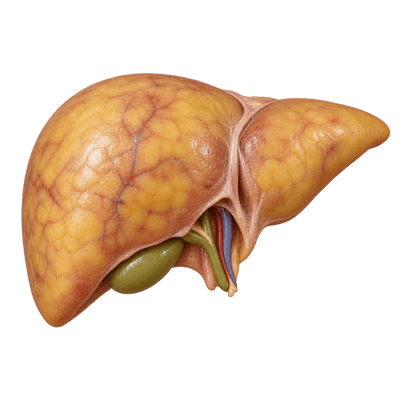
Cancer, your heart and the long run
On this page
Alcohol causes cancers of the mouth, throat, voice box, esophagus and liver, and it raises the risk of breast and colon cancer. It was behind about 5% of US cancer cases in 2019. The old idea that a glass a day helps your heart and helps you live longer came partly from counting former drinkers as non-drinkers.
For decades the message people heard was that a little alcohol is good for you, especially red wine. A lot of people still believe it. The cancer side got much less airtime, even though the International Agency for Research on Cancer has listed alcohol as a cause of cancer since 1987. Both are shifting fast. In Gallup’s August 2025 poll, a record 53% of US adults said drinking in moderation is bad for your health.
What we’d do
Don’t drink for your health. There’s no health reason to start, and for cancer, less is lower risk at every level. If you drink, the long-run advice is the same as the advice for tonight: count the pour, keep most nights dry and keep the week small. If your face turns red when you drink, take that as a reason to drink a lot less.
If you remember three things
- Alcohol causes cancer. In 2019 it was behind nearly 100,000 US cancer cases and nearly 25,000 cancer deaths.
- The “healthy glass a day” was partly a counting error. 86 of 107 studies on drinking and dying mixed former or occasional drinkers into the non-drinkers.
- A red face is a warning. People with the flushing gene variant who drink anyway have a much higher risk of esophageal cancer.
Does alcohol cause cancer?
Yes. The International Agency for Research on Cancer classified alcohol as a cause of cancer in 1987, with enough evidence that it causes cancers of the mouth, throat, voice box, esophagus and liver. It also raises the risk of breast and colorectal cancer, according to the National Cancer Institute. Its US figures are from a 2024 study of 2019 data. Alcohol was responsible for nearly 100,000 of the 1.8 million cancer cases that year, about 5%, and nearly 25,000 of the 600,000 cancer deaths, about 4%.
The way it does it starts with the first step of clearing a drink. Your liver turns alcohol into acetaldehyde, a toxic chemical that can damage DNA and proteins. Most of it is cleared quickly, but every drink makes some.
The risk rises with the amount, and it starts low. NIAAA says even one drink a day raises a woman’s risk of breast cancer by 5% to 15% compared with women who don’t drink. The US Surgeon General’s recent advisory, as summarized by the National Cancer Institute, put it in counts per 100 people, using Australian data recalculated in US drinks.
| Under one drink a week | One drink a day | Two drinks a day | |
|---|---|---|---|
| Women with an alcohol-related cancer, per 100 | about 17 | 19 | about 22 |
| Men with an alcohol-related cancer, per 100 | 10 | 11 | 13 |
Stopping helps. The National Cancer Institute says people who stop drinking have lower risks of mouth and esophageal cancer, and possibly of throat, breast and colorectal cancer, though it can take years for the risk to come back down to that of someone who never drank.
Why does a red face matter?
If your face turns red when you drink, it’s usually a gene variant in ALDH2, the enzyme that clears acetaldehyde. With the slow version, acetaldehyde builds up, and the flush, a racing heart and nausea come with it. About 36% of people of East Asian descent (Japanese, Chinese and Korean) flush this way, and a 2009 review estimated at least 540 million people carry the variant, about 8% of the world.
Most people with the variant drink little, because it feels bad. The ones who drink anyway carry a much higher cancer risk. In case-control studies in Japan and Taiwan that the review pulled together, drinkers with one copy of the variant had 3.7 to 18.1 times the odds of esophageal cancer, after accounting for how much they drank. The National Cancer Institute says the extra risk of esophageal and head and neck cancer doesn’t show up in carriers who don’t drink.
Is a glass a day good for your heart?
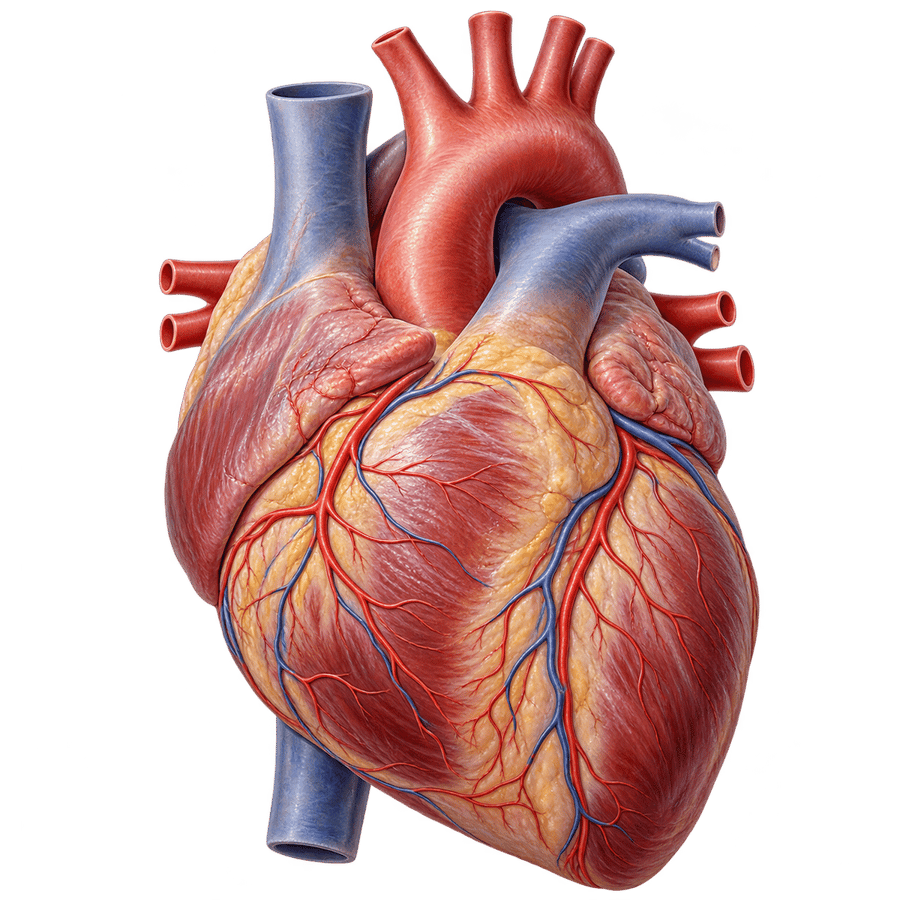
This is where good scientists still disagree. The old observational studies found that light drinkers had fewer heart attacks than non-drinkers. The question is whether the drinks did that, or something else about light drinkers did.
A 2022 study of 371,463 adults in the UK Biobank tested it two ways. Light and moderate drinkers turned out to have healthier lives in general, and once the researchers accounted for that, the apparent heart benefit shrank. Then they used genes that nudge how much people drink, which can’t be explained by lifestyle. Light drinking came with a small rise in heart risk, and heavier drinking with a risk that climbed faster and faster.
On the other side, a December 2024 review by the National Academies, requested by Congress to inform the new US guidelines, found with moderate certainty that moderate drinking (up to two drinks a day for men and one for women) went with lower deaths from heart disease, compared with never drinking. It rated the evidence on fewer non-fatal heart attacks and strokes as low certainty. A glass of red wine a day is good for your heart lays out both sides.
What nobody disputes is that heavy drinking raises heart risk and blood pressure. bloodpressure.guide covers blood pressure.
Do moderate drinkers live longer?
The famous curve, where light drinkers outlive non-drinkers, has a counting problem. Imagine checking whether running is good for your knees by comparing runners with non-runners, when the non-runners include everyone who quit running because their knees gave out. People often stop drinking because they got sick, and many studies put them in the non-drinker group.
A 2023 review of 107 studies, with 4.8 million people and 425,564 deaths, checked how common that was. In 86 of the 107 studies, former drinkers or occasional drinkers were mixed into the non-drinkers, and only 21 were free of both problems. After correcting for it, occasional drinkers and light drinkers, up to about 24 g a day or 1.7 US drinks, had no lower risk of dying than people who never drank. Risk rose for women from about 25 g a day, about 1.8 US drinks, and for men from about 45 g, about 3.2 US drinks.
The National Academies review the next year still found, with moderate certainty, that moderate drinkers had lower deaths from all causes than never-drinkers. Two careful groups looked at much the same research and landed in different places, mostly over which studies to trust. Moderate drinkers live longer goes through why.
What do the US guidelines say now?
The 2025-2030 Dietary Guidelines, released in January 2026, dropped the old limit of one drink a day for women and two for men. They now say “Consume less alcohol for better overall health,” with no number. They say people who are pregnant, recovering from alcohol use disorder, unable to control how much they drink, or taking medicines or living with conditions that interact with alcohol should avoid it completely, and people with a family history of alcoholism should be mindful of it.
No study can randomly assign thousands of people to drink or not for 20 years, so all of this comes from watching people, plus the genetic studies. The cancer link is the firmest part, because it has a known mechanism, a dose pattern and an international classification behind it. The heart and lifespan benefit is the part that keeps getting smaller as the studies get better.
Checked against the National Cancer Institute’s fact sheet on alcohol and cancer risk (reviewed May 2, 2025), NIAAA’s page on women and alcohol, the National Academies’ 2024 review and the Dietary Guidelines for Americans, 2025-2030, on November 14, 2026.
The newer pages go further on each of these: why one drink a day looked healthy, how alcohol causes cancer, and your risk with and without for cancer, breast cancer, AFib, liver disease, blood pressure and dementia.
8 sources
- National Cancer Institute, Alcohol and Cancer Risk, reviewed May 2, 2025cancer.gov
- National Institute on Alcohol Abuse and Alcoholism, Women and Alcohol, updated December 2025niaaa.nih.gov
- Brooks PJ and others, The alcohol flushing response: an unrecognized risk factor for esophageal cancer from alcohol consumption, PLoS Medicine, 2009journals.plos.org
- Zhao J and others, Association between daily alcohol intake and risk of all-cause mortality: a systematic review and meta-analyses, JAMA Network Open, 2023pubmed.ncbi.nlm.nih.gov
- Biddinger KJ and others, Association of habitual alcohol intake with risk of cardiovascular disease, JAMA Network Open, 2022pubmed.ncbi.nlm.nih.gov
- National Academies of Sciences, Engineering, and Medicine, New Report Reviews Evidence on Moderate Alcohol Consumption and Health Impacts, December 17, 2024nationalacademies.org
- US Department of Health and Human Services and US Department of Agriculture, Dietary Guidelines for Americans, 2025-2030, Limit Alcoholic Beveragescdn.realfood.gov
- Saad L, U.S. Drinking Rate at New Low as Alcohol Concerns Surge, Gallup, August 13, 2025news.gallup.com