If you still want to drink, how to weigh it and keep the cost small
On this page
Alcohol isn’t good for you, and that’s not the end of the conversation. People drink for the dinner, the friends and the celebration, and you can decide those justify a small cost. The point is to make the choice knowing the price, then keeping the price low: smaller pours, earlier in the evening, with food, and more nights without.
Most advice on drinking goes one of two ways. Either it pretends a glass of red is a health food, or it treats anyone who has a beer like they have a problem. Neither matches how most people live. A drink with friends is a normal part of a good life for a lot of adults, and you don’t need a health reason to enjoy it. You just need to know what you’re trading.
What we’d do
Decide ahead of time, not at the table. Pick the nights you’ll drink and how many, keep most nights dry, and make each drink count for something you enjoy. A 5 oz pour of good wine with dinner on Saturday costs much less than three big glasses on the couch every night, and most people enjoy the first one more.
The trade, in plain numbers
The risk from alcohol starts low and grows with each drink. In the US Surgeon General’s 2025 figures, as given by the National Cancer Institute, about 17 of 100 women who drink less than once a week get an alcohol-related cancer in their lifetime. At a drink a day it’s 19, and at two it’s 22. For men it’s 10, 11 and 13. Death rates in a review of 107 studies were flat up to about 1.7 US drinks a day and climbed from there, faster for women.
The real choice is how much risk you’ll take for a given evening. Two glasses at a wedding once a month and two glasses every night are very different trades, even though both get called “moderate.”
The five habits that cut the cost most
1. Count the pour. A US standard drink is 14 g of alcohol, which is 5 oz of 12% wine. A 6 oz pour of 13.5% wine is 1.35 drinks, a 9 oz pour is 2, and a 16 oz IPA is almost 2. Measure your usual glass once at home and you’ll know what you’re really having.
Real pours, in US standard drinks
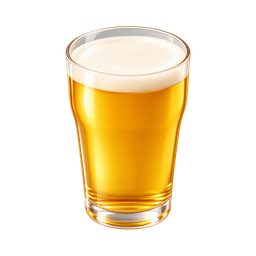 12 oz beer12 oz, 5%
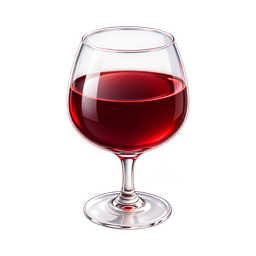 5 oz wine5 oz, 12%
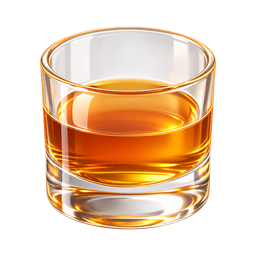 A shot1.5 oz, 40%16 oz pint16 oz, 5%6 oz pour6 oz, 13.5%16 oz IPA16 oz, 7%9 oz pour9 oz, 13.5%
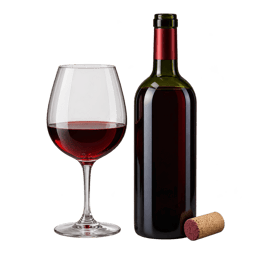 A bottle750 mL, 13.5%
2. Eat first, and drink with the meal. In a lab study, the same dose of alcohol after breakfast gave a peak about a third lower than on an empty stomach, and it cleared about two hours sooner. In the Million Women Study, women who usually drank with meals had a lower cirrhosis risk than women who drank the same amount without food.
3. Finish earlier. The alcohol in your blood at bedtime is what breaks up your sleep. In 20,968 WHOOP members, finishing an hour earlier than usual, against an hour later, came with a slightly lower heart rate that night. Last call works out your latest time for a clear bedtime.
4. Decide the number before you start. NIAAA suggests choosing how many days a week you’ll drink and how many drinks on those days. Spread them out, too, because 4 or more drinks for women or 5 or more for men in about two hours is what NIAAA calls binge drinking.
5. Keep most nights dry. Dry nights are when your sleep, heart rate and liver catch up. In the Million Women Study, women who drank every day had a 61% higher cirrhosis risk than women who drank the same weekly amount on fewer days.
Making it easier at the table
- Have your “no thanks” ready. NIAAA’s advice is to have a polite, quick answer, since the longer you hesitate the easier it is to go along. “I’m good, thanks” works. So does holding a glass of something else.
- Order the good one. If you’re having one drink, make it the one you most want, not the cheapest pour of the house wine.
- Ask the server not to top off your glass, so you can count what you’ve had. NIAAA suggests the same.
- Bring your own drink to a party. A non-alcoholic beer or a good sparkling drink means you’re never empty-handed.
When not to drink at all
Some situations take the trade off the table. The 2025-2030 US Dietary Guidelines say people who are pregnant, recovering from alcohol use disorder or unable to control how much they drink, and people on medicines or with conditions that interact with alcohol, should avoid it completely. If you’re trying for a baby, stop ahead of time. Don’t drive after drinking.
And if you find you’re drinking more than you planned, again and again, pay attention to it. Am I drinking too much? has the three questions doctors use, and ways to stop or cut back has what works.
You won’t be the only one
Fewer Americans drink than at any time Gallup has measured, 54% in 2025, and the ones who do drink less. The average drinker said they had 2.8 drinks in the past week, down from 3.8 a year earlier, and 40% said it had been more than a week since their last drink. Turning down a second round is a lot more normal than it used to be.
10 sources
- Zhao J and others, Association Between Daily Alcohol Intake and Risk of All-Cause Mortality: A Systematic Review and Meta-analyses, JAMA Network Open, 2023pubmed.ncbi.nlm.nih.gov
- National Cancer Institute, Alcohol and Cancer Risk, reviewed May 2, 2025cancer.gov
- Jones AW, Jönsson KA, Food-induced lowering of blood-ethanol profiles and increased rate of elimination immediately after a meal, Journal of Forensic Sciences, 1994pubmed.ncbi.nlm.nih.gov
- Grosicki GJ and others, Real-world effects of alcohol on heart rate, sleep, and physical activity by age and sex, PLOS Digital Health, 2026 (funded by WHOOP)pubmed.ncbi.nlm.nih.gov
- Simpson RF and others, Alcohol drinking patterns and liver cirrhosis risk: analysis of the prospective UK Million Women Study, Lancet Public Health, 2019pubmed.ncbi.nlm.nih.gov
- National Institute on Alcohol Abuse and Alcoholism, Rethinking Drinking, Tips to Tryrethinkingdrinking.niaaa.nih.gov
- National Institute on Alcohol Abuse and Alcoholism, Drinking Levels and Patterns, updated January 2026niaaa.nih.gov
- National Institute on Alcohol Abuse and Alcoholism, What Is A Standard Drink? Updated December 2025niaaa.nih.gov
- Saad L, U.S. Drinking Rate at New Low as Alcohol Concerns Surge, Gallup, August 13, 2025news.gallup.com
- US Department of Health and Human Services and US Department of Agriculture, Dietary Guidelines for Americans, 2025-2030, Limit Alcoholic Beveragescdn.realfood.gov