Drinking with less cost to your night
On this page
If you drink, five things make the night cost less. Eat a real meal first, count the pour, finish earlier, slow down, and make the last drink a 0% one. Moving two glasses of wine from 8 and 9pm to 6 and 7pm cuts the hours of sleep with alcohol in it from about 3.8 to 1.8.
Most drinking tips are about the wrong things. Drink water between rounds, stick to clear spirits, take something before bed. They feel like they should help, and they barely move the night. The two things that really set what a drink costs you are how many grams you have and how close the last one is to your sleep, and both are easy to change once you see the numbers.
What we’d do
Run a tapered evening. Eat first, have your drinks early, with dinner, and make the last drink of the night a 0% one. Set your cutoff by your bedtime, not by when the evening ends, and let Last call tell you the time. For most people it’s a lot earlier than they’d guess.
If you remember three things
- Timing is the cheapest change. The same two glasses finished two hours earlier gave back about 2 hours of alcohol-free sleep in our worked evening.
- A smaller pour counts. Two 5 oz glasses of 12% wine instead of two 6 oz glasses of 13.5% gave back about 1.4 hours.
- The 0% swap wins. Swapping the second glass for a 0% drink gave back about 3 hours.
Why does finishing earlier help so much?
Think of each drink as a load of laundry in a dryer with a fixed timer. You can’t make the dryer run faster. If you want everything dry by 11pm, the last load has to go in early, and every extra load pushes the finish back.
Your liver clears a fixed amount of alcohol an hour, about 15 mg per 100 mL on average, so each drink adds its own block of time. Whatever hasn’t cleared by bedtime goes to bed with you, and that’s the part that breaks up the second half of your night.
What does each change buy you?
Here’s one evening on our engine. A 150 lb woman has two 6 oz glasses of 13.5% red wine with dinner, finished at 8pm and 9pm, and goes to bed at 11. Then we change one thing at a time.
| Her evening | Mostly cleared | Hours of sleep with alcohol |
|---|---|---|
| Two glasses, 8pm and 9pm, with dinner | about 2:50am | about 3.8 |
| The same, without dinner | about 5:00am | about 6 |
| Two glasses, 7pm and 8pm | about 1:50am | about 2.8 |
| Two glasses, 6pm and 7pm | about 12:50am | about 1.8 |
| Two 5 oz glasses of 12% wine, 8pm and 9pm | about 1:25am | about 2.4 |
| One glass at 8pm, then a 0% drink | about 11:40pm | about 0.7 |
Skipping dinner costs her more than two hours. Each hour she moves the drinks earlier gives back about an hour. And the 0% swap does the most, because it removes half the alcohol and the late half at that. Tonight’s clear time runs this for your own drinks.
1. Eat a real meal first
In a 1994 lab study, ten men drank the same dose once on an empty stomach and once right after a breakfast of sandwiches, yogurt, an egg and juice. After eating, their peak was about a third lower and the alcohol cleared about two hours sooner. A 2010 review of clearing rates found the same direction, with the liver clearing 15 to 20 mg per 100 mL an hour after a meal against 10 to 15 on an empty stomach. Eat before the first drink.
2. Count the pour
A 6 oz pour of 13.5% wine is 1.35 US drinks, a 16 oz IPA at 7% is 1.9, and a 12 oz craft beer at 10% is 2, which NIAAA itself points out. Ask for a 5 oz pour, pick a lower-strength beer or wine, or make a spritzer. Half a 5 oz glass of 12% wine topped up with sparkling water is half a US drink in a full glass. What’s in your glass has the full table.
3. Finish earlier
Here’s the latest time to finish your last drink so it’s mostly cleared by an 11pm bedtime, with one drink an hour, on our engine. The first time is if you’re not sure about food, and the one in brackets is with a meal.
| Body | 1 drink | 2 drinks | 3 drinks |
|---|---|---|---|
| Woman, 130 lb | 7:30pm (7:40pm) | 5:20pm (5:55pm) | 3:15pm (4:20pm) |
| Woman, 160 lb | 8:05pm (8:10pm) | 6:25pm (6:50pm) | 4:55pm (5:40pm) |
| Man, 160 lb | 8:35pm (8:30pm) | 7:20pm (7:35pm) | 6:15pm (6:45pm) |
| Man, 190 lb | 8:55pm (8:45pm) | 7:55pm (8:00pm) | 7:05pm (7:25pm) |
For one drink, the meal times can come out a few minutes earlier than “not sure” for bigger bodies, since a drink with food enters the blood more slowly and lingers a little. Nobody has run a trial of a cutoff before bed, so these come from the clearing math. In the WHOOP data on 20,968 members, drinking an hour earlier than usual, against an hour later, came with a slightly lower sleeping heart rate and higher HRV that night. Last call works out yours for any bedtime and any drinks.
4. Slow down
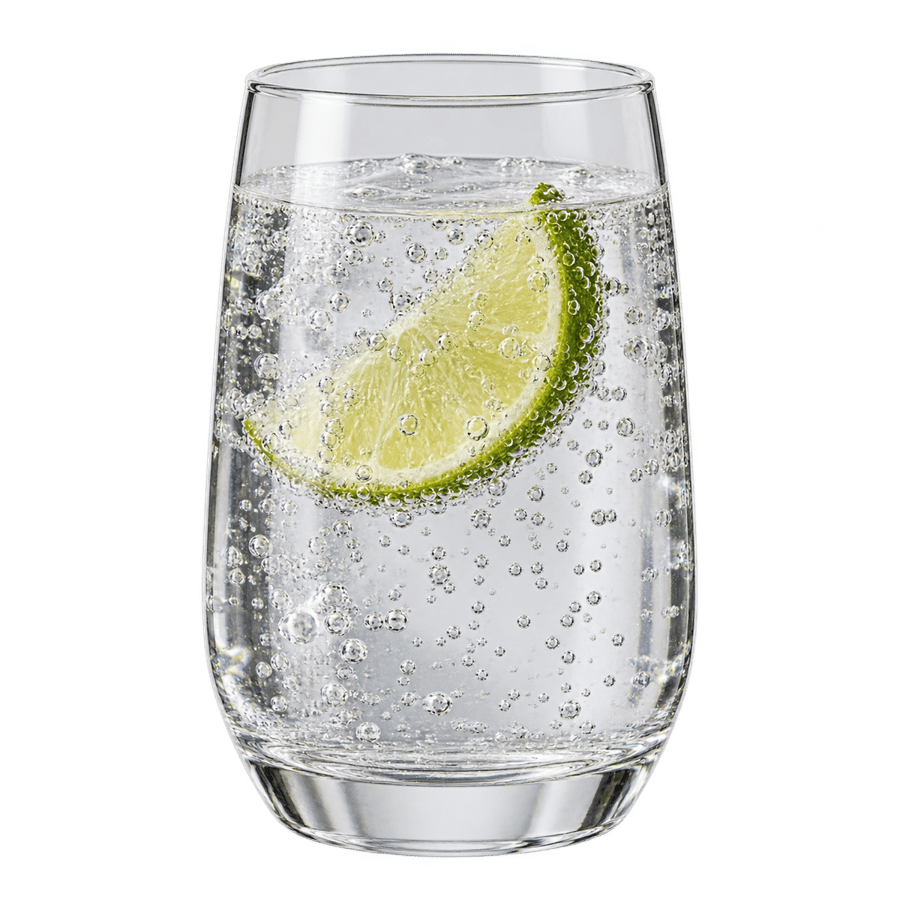
The same drinks spread over an evening give a lower peak than drinks close together, because the liver keeps clearing in the gaps. NIAAA counts 4 or more drinks for women, or 5 or more for men, in about two hours as binge drinking. A glass of water or a 0% drink between rounds is the easiest way to spread them out. It won’t prevent a hangover on its own, since water during the evening had only a modest effect in a 2024 review, but it slows the pace and usually means fewer drinks in total.
5. Make the last drink a 0% one
This is the single best swap, because the last drink is the one that runs deepest into your sleep. Order a 0% beer, sparkling water with lime or a mocktail for the last round and keep the glass in your hand. Under US labeling rules, “non-alcoholic” beer can have up to 0.5% alcohol, about a tenth of a US drink in a 12 oz bottle, and only “alcohol free” means none.
What doesn’t help much?
- Clear spirits for better sleep. In a 2010 study, people felt worse the morning after bourbon than vodka, but alcohol cut their sleep efficiency and REM the same either way.
- A drink to fall asleep. Across 27 studies, falling asleep faster only showed up at four to five drinks, and REM was cut from about two.
- Coffee to “sober up.” It doesn’t lower your level, and it adds caffeine to your night. Coffee sobers you up explains.
If you still want to drink covers the bigger trade, how to weigh a drink’s cost against the evening, beyond what it does to your night.
9 sources
- Jones AW, Jönsson KA, Food-induced lowering of blood-ethanol profiles and increased rate of elimination immediately after a meal, Journal of Forensic Sciences, 1994pubmed.ncbi.nlm.nih.gov
- Jones AW, Evidence-based survey of the elimination rates of ethanol from blood with applications in forensic casework, Forensic Science International, 2010pubmed.ncbi.nlm.nih.gov
- Grosicki GJ and others, Real-world effects of alcohol on heart rate, sleep, and physical activity by age and sex, PLOS Digital Health, 2026 (funded by WHOOP)pubmed.ncbi.nlm.nih.gov
- National Institute on Alcohol Abuse and Alcoholism, What Is A Standard Drink? Updated December 2025niaaa.nih.gov
- National Institute on Alcohol Abuse and Alcoholism, Drinking Levels and Patterns, updated January 2026niaaa.nih.gov
- Mackus M and others, Alcohol hangover versus dehydration revisited: the effect of drinking water to prevent or alleviate the alcohol hangover, Alcohol, 2024pubmed.ncbi.nlm.nih.gov
- Rohsenow DJ and others, Intoxication with bourbon versus vodka: effects on hangover, sleep, and next-day neurocognitive performance in young adults, Alcoholism: Clinical and Experimental Research, 2010pubmed.ncbi.nlm.nih.gov
- 27 CFR 7.65, Alcohol content (malt beverage labeling), Cornell Legal Information Institutelaw.cornell.edu
- Gardiner C and others, The effect of alcohol on subsequent sleep in healthy adults: a systematic review and meta-analysis, Sleep Medicine Reviews, 2025pubmed.ncbi.nlm.nih.gov