
Ways to stop drinking or cut back that actually work
On this page
The methods that work are simple and unglamorous. Decide whether you’re quitting or cutting down. Write down every drink. Set a number of drinking days and drinks, and keep some days dry. Change the situations that make you drink, and have a plan for the urge when it comes. NIAAA says that if two or three months of trying hasn’t moved it, quit altogether, get professional help, or both.
Most people who want to drink less try willpower first. They decide on Monday they’ll have less this week, and by Friday the plan has dissolved into “I’ll start next week.” That doesn’t mean they’re weak. It means a vague goal can’t compete with a habit that runs on autopilot at 6pm. The fix is to make the plan concrete, write it down and change the setting around the habit.
What we’d do
Start with one dry week, tracked, to see what happens to your sleep and your mornings. Then pick your number: dry most nights, and a small set number on the nights you drink. Keep no alcohol in the house if home is where it happens. Swap the first drink of the evening for a good non-alcoholic one, since that’s the one running on habit. If you drink heavily every day, see a doctor before you start, because withdrawal can become dangerous.
First, cut down or quit?
NIAAA says quitting is strongly advised if you’ve tried cutting down and can’t stay within your limits, if you have alcohol use disorder or any of its symptoms, if a health condition is caused or made worse by drinking, if you take a medicine that interacts with alcohol, or if you are or might be pregnant. Otherwise, talk it through with your doctor, thinking about family history, your age, any drinking-related injuries, and problems like poor sleep, pain or anxiety.
Some people find a clean stop easier than a limit, because there’s no decision to make each evening. Others do better with a number. Either is fine. The point is to pick one.
The tools, in the order we’d use them
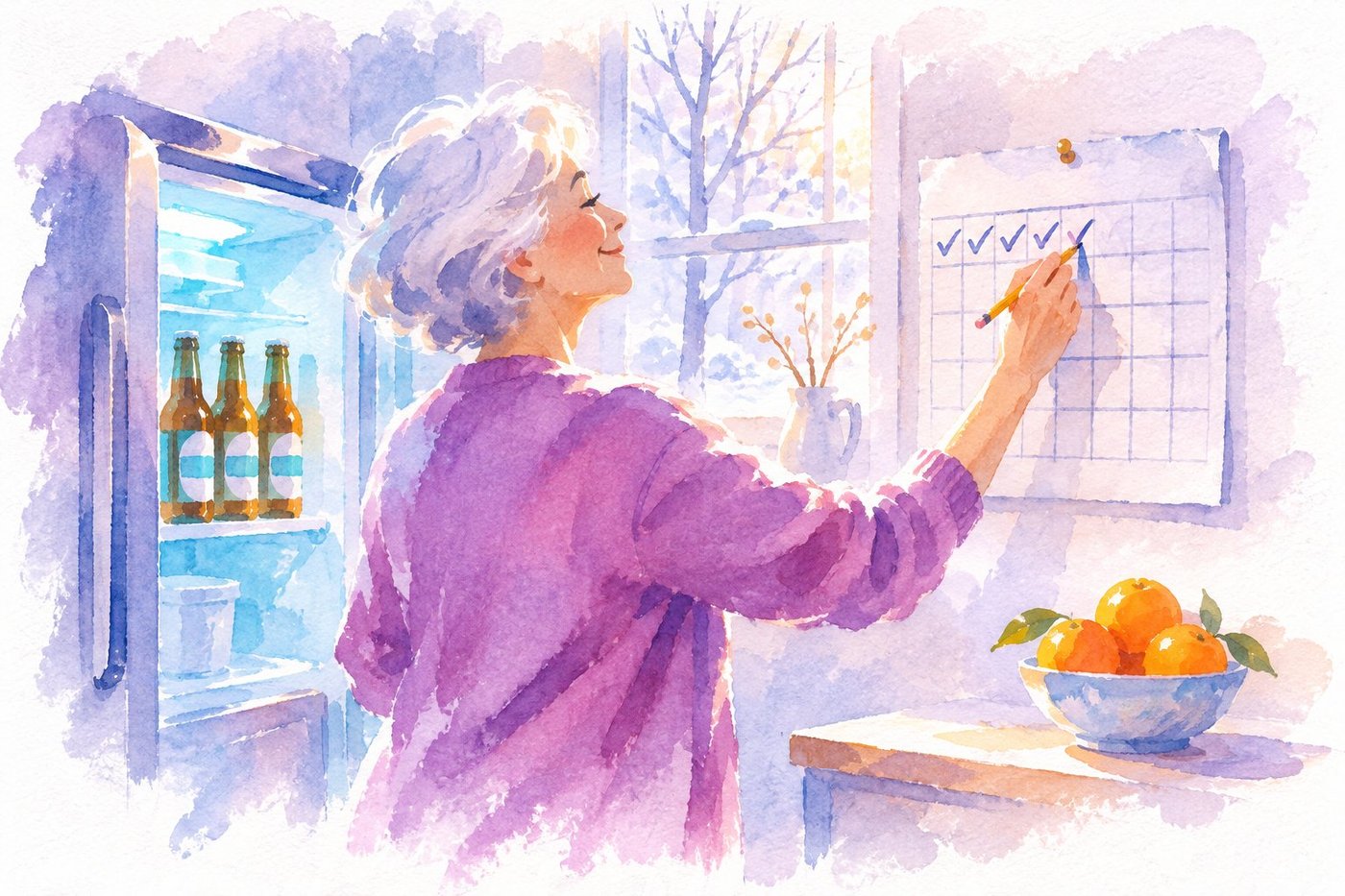
1. Track every drink. NIAAA’s first tip. Use a note on your phone, a calendar or an app, and write the drink down before you have it. That small pause slows people down, and the count is usually higher than they guessed. Your week turns a week of drinks into real US drinks.
2. Count and measure. A big glass of wine can be two drinks. Measure your usual pour once at home, and ask the server not to top off your glass when you’re out.
3. Set a number. Decide how many days a week you’ll drink and how many drinks on those days, with some days dry. Write it down. “Less” isn’t a number.
4. Change the triggers. Notice the people, places, times and feelings that come before a drink you didn’t want. Avoid what you can. If drinking at home is the problem, keep little or no alcohol there. If it’s the 6pm habit, put something else in that slot: a walk, a workout, cooking, a call.
5. Plan for the urge. When one hits and you can’t avoid it, NIAAA suggests rereading your reasons for changing (keep them on your phone), talking to someone you trust, or getting busy with something physical. Or accept the urge and ride it out without giving in, knowing it will crest like a wave and pass.
6. Know your “no.” Have a polite “No, thanks” ready before anyone offers. The faster you answer, the less likely you are to give in.
7. Swap, don’t just subtract. An empty hand at a party is hard. The best non-alcoholic drinks has options from seltzer with bitters to non-alcoholic beer.
Try a dry month
A month off is a good way to find out what alcohol is doing to you. In 94 moderate to heavy drinkers who chose to take one, insulin resistance fell 26%, blood pressure about 6% and weight 1.5%, with no change in a group that kept drinking. A study of 857 people who signed up for Dry January found that six months later they were drinking less than before, even the ones who didn’t make it all the way. Very few drank more afterward. Dry January has more.
Your body notices fast. In a 40-person smartwatch study, nighttime resting heart rate rose from 63.6 to 66.6 beats a minute over three drinking nights and was back near 64.9 in the three dry days after.
If you need more than tips
NIAAA says that if you haven’t made progress after two to three months, it’s time to consider quitting altogether, getting professional help, or both. Help works. Three approved medicines, naltrexone, acamprosate and disulfiram, help people stop or cut down, and none is addictive. A 2025 trial in 48 adults with alcohol use disorder also found that low-dose semaglutide, the drug in Ozempic, cut drinks on drinking days and craving, though it isn’t approved for this. If you can’t stop has the helplines, programs and groups.
If you slip
Setbacks are common. NIAAA’s advice is to get back on track as soon as you can, give your approach a fair trial, and try something else if it isn’t working. Each try teaches you something.
9 sources
- National Institute on Alcohol Abuse and Alcoholism, Rethinking Drinking, Tips to Tryrethinkingdrinking.niaaa.nih.gov
- National Institute on Alcohol Abuse and Alcoholism, Rethinking Drinking, To Cut Down or to Quitrethinkingdrinking.niaaa.nih.gov
- National Institute on Alcohol Abuse and Alcoholism, Rethinking Drinking, Support Strategies for Quittingrethinkingdrinking.niaaa.nih.gov
- National Institute on Alcohol Abuse and Alcoholism, Treatment for Alcohol Problems: Finding and Getting Help, updated February 2025niaaa.nih.gov
- de Visser RO, Robinson E, Bond R, Voluntary temporary abstinence from alcohol during Dry January and subsequent alcohol use, Health Psychology, 2016pubmed.ncbi.nlm.nih.gov
- Mehta G and others, Short-term abstinence from alcohol and changes in cardiovascular risk factors, liver function tests and cancer-related growth factors, BMJ Open, 2018pubmed.ncbi.nlm.nih.gov
- Strüven A and others, The Impact of Alcohol on Sleep Physiology: A Prospective Observational Study on Nocturnal Resting Heart Rate Using Smartwatch Technology, Nutrients, 2025pmc.ncbi.nlm.nih.gov
- Hendershot CS and others, Once-weekly semaglutide in adults with alcohol use disorder: a randomized clinical trial, JAMA Psychiatry, 2025pubmed.ncbi.nlm.nih.gov
- MedlinePlus, Alcohol withdrawal, reviewed January 1, 2025medlineplus.gov