What alcohol does to your liver, and how fast it recovers
On this page
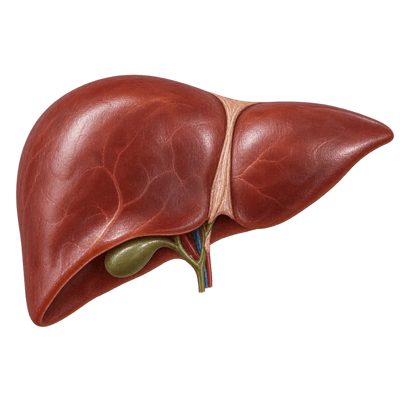
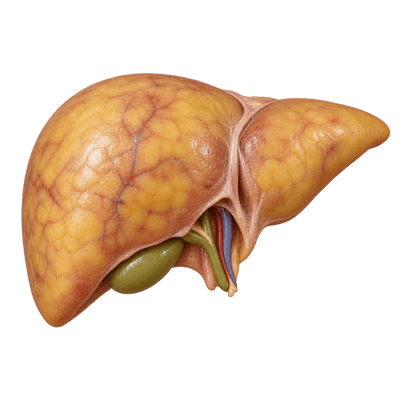
Your liver does almost all the work of clearing alcohol, and it pays for it in fat. NIAAA says a fatty liver shows up in about 95 to 100% of people who drink heavily, and that it’s fully reversible if they stop. Keep drinking and some people’s livers turn inflamed, then scarred. Scarring that reaches cirrhosis generally doesn’t heal.
The liver has a reputation for toughness, and it earns it. It regrows, it filters everything you eat and it doesn’t hurt when it’s in trouble. That last part is the catch. Liver damage from alcohol is silent for years, so most people find out from a blood test or a scan, not from feeling sick.
What we’d do
If you drink most days, take regular breaks of several days in a row, and drink with food rather than on its own. If a blood test ever shows raised liver enzymes, or you’ve been told you have a fatty liver, stop drinking and give it a few months, then test again. If you’ve been diagnosed with cirrhosis or hepatitis, don’t drink at all.
Why alcohol goes to the front of the line
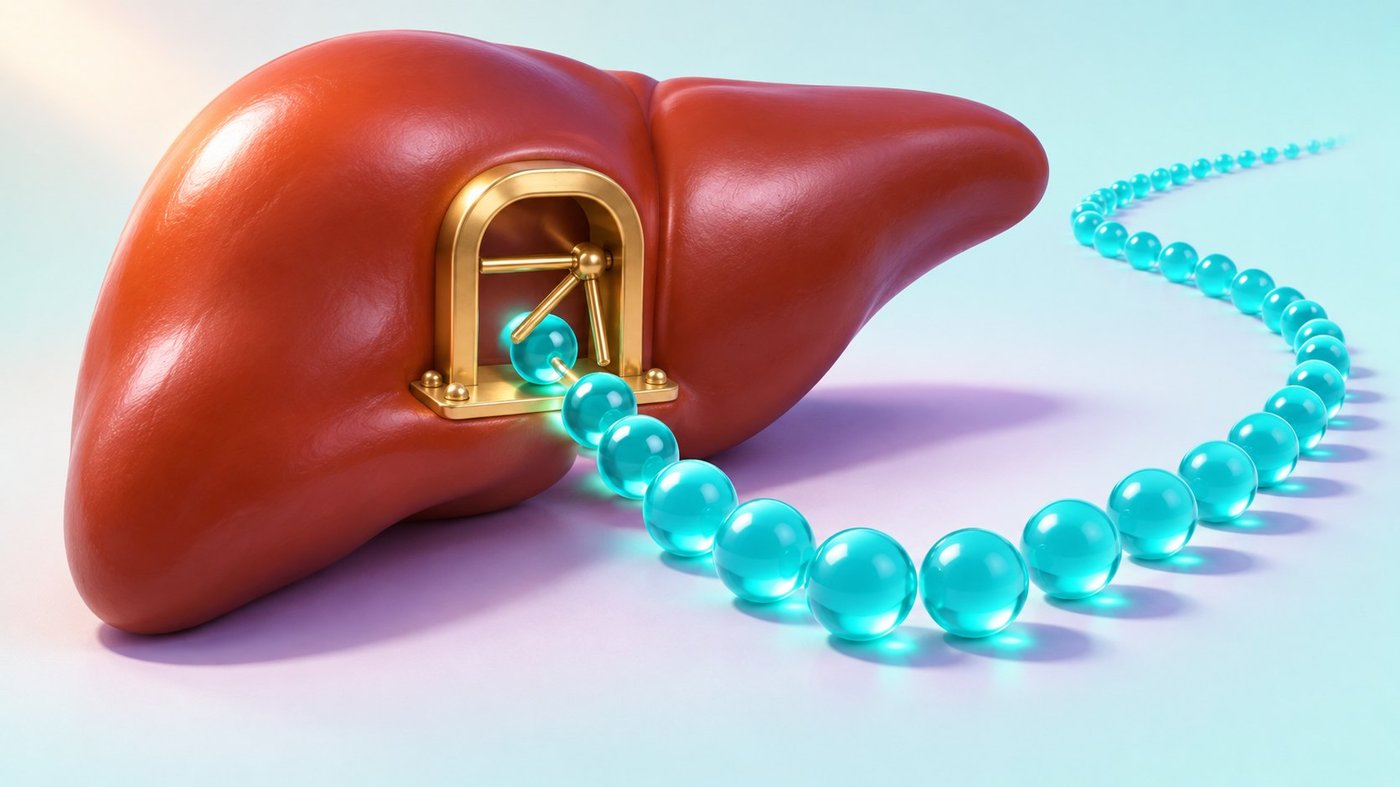
Your body can’t store alcohol, so the liver treats it as urgent. It clears a fixed amount an hour, about 15 mg per 100 mL of blood on average in a 2010 review, and the rest of its work slows while it does. In 8 men who drank 24 g, under two US drinks, fat burning across the whole body fell 73%. With fat burning slowed, fat builds up inside liver cells, and after enough nights that’s what a fatty liver is.
The path, stage by stage
- Fatty liver. NIAAA calls it “the earliest sign of liver injury,” present in about 95 to 100% of heavy drinkers. It usually has no symptoms, and it clears if you stop drinking.
- Inflammation. In 10 to 35% of people with a fatty liver who keep drinking, it turns inflamed. This is alcohol-associated steatohepatitis.
- Scarring. NIAAA says chronic inflammation goes on to fibrosis, scar tissue, in 20 to 40% of patients.
- Cirrhosis. In 8 to 20%, the scarring becomes cirrhosis. NIAAA says “the liver generally does not heal from cirrhosis and transplants often are needed.” Liver cancer is one of the cancers alcohol causes, too.
Alcohol-associated hepatitis, a sudden and dangerous flare, has been found in about 20% of people with alcohol use disorder.
How much does it take?
Less than people think, and it depends on how you drink, not just how much. A study of 6,917 people in two Italian towns in the 1990s found the risk of liver damage started above about 30 g a day, roughly two US drinks, in both men and women. Among people drinking more than that, 5.5% already had signs of liver damage, and 2.2% had cirrhosis.
The UK’s Million Women Study followed 401,806 women who drank for about 15 years. Women who had 15 or more drinks a week had 3.4 times the cirrhosis risk of women who had 1 or 2. At the same weekly amount, drinking every day raised the risk by 61% against drinking on fewer days, and drinking without meals raised it too. Drinking daily and not with food came with about two and a half times the risk.
Risk of cirrhosis in 401,806 women who drank
Two habits protect the liver beyond drinking less: dry days every week, and drinks with food rather than on an empty stomach.
It’s getting more common
NIAAA says cirrhosis killed about 48,000 Americans in 2019, half of them from alcohol, and the death rate from alcohol-related cirrhosis rose 47% from 2000 to 2019. A 2024 model put the cost of alcohol-associated liver disease at $31 billion in 2022, heading to $66 billion a year by 2040, with women a growing share. What it costs has more on the money side.
How fast it recovers
The early stage is the hopeful part. A fatty liver from drinking is fully reversible when you stop. Nobody has pinned down the exact number of weeks for everyone, since it depends on how much fat and how much drinking, so the useful test is a liver blood panel or scan before and after a few dry months, with your doctor. Ways to stop or cut back has what helps, and liver disease, with and without has the numbers.
If you drink heavily every day, talk to a doctor before you stop, because withdrawal can become dangerous.
7 sources
- National Institute on Alcohol Abuse and Alcoholism Core Resource on Alcohol, Medical Complications: Common Alcohol-Related Concernsniaaa.nih.gov
- Simpson RF and others, Alcohol drinking patterns and liver cirrhosis risk: analysis of the prospective UK Million Women Study, Lancet Public Health, 2019pubmed.ncbi.nlm.nih.gov
- Bellentani S and others, Drinking habits as cofactors of risk for alcohol induced liver damage. The Dionysos Study Group, Gut, 1997pubmed.ncbi.nlm.nih.gov
- Siler SQ, Neese RA, Hellerstein MK, De novo lipogenesis, lipid kinetics, and whole-body lipid balances in humans after acute alcohol consumption, American Journal of Clinical Nutrition, 1999pubmed.ncbi.nlm.nih.gov
- Jones AW, Evidence-based survey of the elimination rates of ethanol from blood with applications in forensic casework, Forensic Science International, 2010pubmed.ncbi.nlm.nih.gov
- Julien J, Ayer T, Tapper EB, Chhatwal J, The Rising Costs of Alcohol-Associated Liver Disease in the United States, American Journal of Gastroenterology, 2024pubmed.ncbi.nlm.nih.gov
- National Cancer Institute, Alcohol and Cancer Risk, reviewed May 2, 2025cancer.gov