
Alcohol and dementia risk, with and without drinking
Drinking more raises your risk of dementia, and the newest evidence finds no amount that protects you. In a 2026 study of 559,559 adults, heavy drinkers had 41% more dementia and people with alcohol use disorder 51% more than light drinkers. When the researchers used genetics in 2.4 million people to rule out other differences, the risk rose with every step up in drinking.
Dementia is where the J-curve made its last stand. For years, studies found that people who drank a little had less dementia than people who didn’t drink at all, and headlines ran with it. The pattern is real in the data. What causes it turned out to be the problem.
Dementia risk, two ways of looking
What people reported
In the 2026 study, people aged 56 to 72 in the US Million Veteran Program and the UK Biobank reported how much they drank, and researchers followed them for 4 to 12 years. Over that time 14,540 developed dementia. The familiar U shape showed up: compared with light drinkers, dementia was higher in non-drinkers, in people drinking more than 40 drinks a week (41% higher) and in people with alcohol use disorder (51% higher).
An older British study found the same shape. In 9,087 civil servants followed for 23 years, people who didn’t drink in midlife and people who drank more than 14 UK units a week both had more dementia. Above 14 units, each extra 7 units a week raised the risk by 17%. The researchers found that part of the non-drinkers’ extra risk came from heart and metabolic disease.
What the genes say
To get around the differences between drinkers and non-drinkers, the 2026 team used genetic variants linked to drinking, in 2.4 million people. In that analysis the U disappeared. Dementia risk rose steadily with genetically predicted drinking. A standard step up in drinks a week went with 15% more dementia, and a doubling in the genetic risk of alcohol use disorder went with 16% more.
They also found why light drinkers looked protected. People who went on to develop dementia drank less in the years before diagnosis, as early memory problems set in. That moves people on their way to dementia into the “light” and “non-drinking” groups, which makes those groups look worse and moderate drinking look better. The authors concluded that “any level of alcohol consumption may contribute to dementia risk.”
The brain scans agree
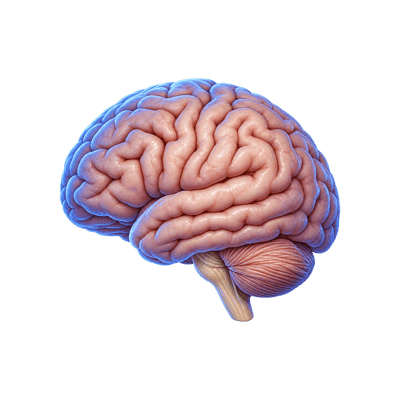
A 2022 study of brain scans in 36,678 middle-aged and older adults found less gray matter and weaker white matter with more drinking, already at an average of one to two UK units a day. NIAAA says heavy drinking damages both, showing up as problems with attention, memory and reasoning, and that stopping “may partially reverse these changes.”
What we’d do
If dementia runs in your family, alcohol is one of the few risks you control, so keep it low or at zero. Don’t start drinking to protect your memory, because the evidence that seemed to show that came from people who had already started to decline. As you get older, the same drink hits harder: NIAAA says older adults reach higher blood levels from the same amount and that drinking is linked to faster cognitive decline. Why does alcohol hit harder as you get older? has more.
If you drink heavily every day, talk to a doctor before you stop, because withdrawal can become dangerous.
Checked against the 2026 study in BMJ Evidence-Based Medicine, the 2018 Whitehall II study in the BMJ and NIAAA’s pages on older adults and medical complications, on November 15, 2026.
5 sources
- Topiwala A and others, Alcohol use and risk of dementia in diverse populations: evidence from cohort, case-control and Mendelian randomisation approaches, BMJ Evidence-Based Medicine, 2026pubmed.ncbi.nlm.nih.gov
- Sabia S and others, Alcohol consumption and risk of dementia: 23 year follow-up of Whitehall II cohort study, BMJ, 2018pubmed.ncbi.nlm.nih.gov
- Daviet R and others, Associations between alcohol consumption and gray and white matter volumes in the UK Biobank, Nature Communications, 2022pubmed.ncbi.nlm.nih.gov
- National Institute on Alcohol Abuse and Alcoholism, Older Adults, updated December 2025niaaa.nih.gov
- National Institute on Alcohol Abuse and Alcoholism Core Resource on Alcohol, Medical Complications: Common Alcohol-Related Concernsniaaa.nih.gov