Why do I feel anxious after drinking?
Because the calm you got from drinking doesn’t last, and it can rebound into anxiety as the alcohol wears off. Add a broken second half of the night, and many people wake up jumpy and full of dread. People call it hangxiety. In a 2019 study, shy drinkers felt a little calmer the night they drank and significantly more anxious the next day.
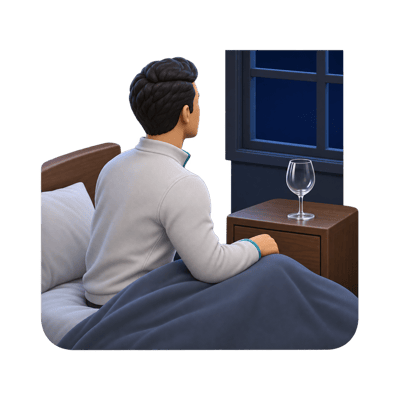
Lots of people drink to take the edge off: a party where they don’t know anyone, a hard week, a first date. It works, for a few hours. The next morning they replay every conversation, sure they said something wrong. It’s a common after-effect of the drink, and researchers have measured it.
What we’d do
Count the next-day anxiety as part of the drink’s cost. If you drink to manage social nerves, try one drink and a non-alcoholic one after, and see how the morning feels. If anxiety or low mood sticks around for days, or you’re using alcohol to cope, talk to a doctor.
The study
Researchers from the University of Exeter and University College London tested almost 100 social drinkers in their own homes, randomly assigning them to drink or stay sober. Those who drank had about six UK units, about three and a half US drinks. In the shyest people, the drinks eased their anxiety slightly that evening. The next morning, their anxiety rose significantly, and the ones with the biggest rise also scored higher on a test for alcohol problems. One of the researchers, Professor Celia Morgan, suggested that drinking to ease social anxiety may have “rebound consequences the next day.”
Why it happens
- The hangover starts as the alcohol runs out. A 2024 review describes the hangover as beginning when blood alcohol approaches zero, so the worst of it lands the next morning.
- Your sleep was broken. Alcohol makes the first half of the night deeper and the second half lighter and more disrupted, at every dose. Across 27 studies, even about two drinks cut REM sleep.
When it’s more than a hangover
NIAAA says it’s common for people with alcohol problems to feel depressed or anxious, and that mild symptoms may go away if you cut down or stop. See a doctor or mental health professional if they don’t, or if they get worse. If you have thoughts of suicide, call or text 988, the Suicide and Crisis Lifeline.
Your brain and mood has more, and the two halves of a drinking night explains the sleep side.
5 sources
- Marsh B and others, Shyness, alcohol use disorders and 'hangxiety': A naturalistic study of social drinkers, Personality and Individual Differences, 2019, as described by the University of Exetereurekalert.org
- Mackus M and others, Alcohol hangover versus dehydration revisited: The effect of drinking water to prevent or alleviate the alcohol hangover, Alcohol, 2024pubmed.ncbi.nlm.nih.gov
- Gardiner C and others, The effect of alcohol on subsequent sleep in healthy adults: a systematic review and meta-analysis, Sleep Medicine Reviews, 2025pubmed.ncbi.nlm.nih.gov
- Ebrahim IO, Shapiro CM, Williams AJ, Fenwick PB, Alcohol and sleep I: effects on normal sleep, Alcoholism: Clinical and Experimental Research, 2013pubmed.ncbi.nlm.nih.gov
- National Institute on Alcohol Abuse and Alcoholism, Rethinking Drinking, Professional Supportrethinkingdrinking.niaaa.nih.gov