Does one drink affect sleep?
It can. Across 27 sleep studies, even a low dose cut REM sleep. In 20,968 WHOOP members, one drink more than usual, against one less, came with a sleeping heart rate 2.4 to 2.8 beats higher. When you have that drink changes a lot.
One drink feels like nothing, and plenty of people sleep fine after one. But “one drink” can mean a glass of wine with dinner at 7pm or a whiskey at 10:30pm, and those are two very different nights. What decides the cost is how much of the drink is still in your blood when you fall asleep.
What we’d do
If you have one, have it early and with food, so it’s gone before you sleep. Keep it to a 5 oz glass rather than a big restaurant pour. And don’t have it to help you fall asleep, because a drink at bedtime is the one that reaches furthest into your night.
Dinner glass or nightcap?
Starting the dishwasher at 7pm and starting it at bedtime is the same load. One finishes before you sleep, and the other runs half the night.
On our engine, for a 150 lb woman with an 11pm bedtime:
| One drink | Mostly cleared | Hours of sleep with alcohol |
|---|---|---|
| 5 oz glass of 12% wine at 7pm, with dinner | about 10:00pm | none |
| 6 oz glass of 13.5% wine at 8pm, with dinner | about 11:40pm | about 0.7 |
| The same 6 oz glass at 10:30pm, no food | about 3:10am | about 4.1 (3.4 to 5.3) |
The liver clears a fixed amount an hour, about 15 mg per 100 mL on average, according to a 2010 review. Move the drink later and the whole curve moves into your sleep.
What the studies found
A 2025 analysis of 27 studies found that alcohol delays the first REM sleep and shortens REM overall. REM loss showed up after a low dose, up to 0.5 g of alcohol per kg of body weight, and got worse as the dose went up. That low-dose group runs up to about 2.4 US drinks for a 150 lb woman, so a single drink sits inside it. Falling asleep faster only showed up at a high dose, 0.85 g per kg or more, about 4 drinks for the same woman.
Your heart shows it too. In a 2018 study of 4,098 Finnish employees wearing heart rate monitors, the first three hours of sleep after drinking showed less recovery than on dry nights, and the effect was there even at the lowest intake, up to 0.25 g per kg. That’s about 1.2 US drinks for a 150 lb woman.
Timing helped in the WHOOP data. In women, drinking an hour earlier than usual, against an hour later, came with a sleeping heart rate 0.87 beats lower and HRV 1.5 ms higher, and men were similar. WHOOP paid for that study, and members logged their own drinks.
How to check it on yourself
If you wear a watch or ring, compare a few one-drink nights with a few dry nights on the same device, and look at overnight heart rate first, since it moves the most. Then try the same drink two hours earlier and compare again. The calculator below shows when your drink clears for your body and bedtime.
When will tonight's drinks clear?
Bed at 11:00pm
Mostly cleared by 2:50am
That's about 3.8 hours of your sleep with alcohol in your blood (3.1 to 4.9 if your liver runs faster or slower).
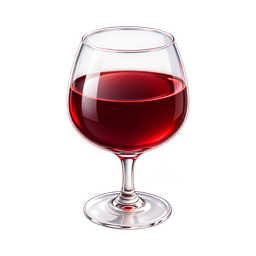 Restaurant pour6 oz, 13.5%, 1.35 US drinks
- Restaurant pour6 oz, 13.5%, 1.35 US drinks
 REM: More REM lost. Your evening is 0.56 g of alcohol per kg of body weight.
The full clock, with the band, the same drinks two hours earlier and what your heart does.
4 sources
- Gardiner C and others, The effect of alcohol on subsequent sleep in healthy adults: a systematic review and meta-analysis, Sleep Medicine Reviews, 2025pubmed.ncbi.nlm.nih.gov
- Grosicki GJ and others, Real-world effects of alcohol on heart rate, sleep, and physical activity by age and sex, PLOS Digital Health, 2026 (funded by WHOOP)pubmed.ncbi.nlm.nih.gov
- Pietilä J and others, Acute effect of alcohol intake on cardiovascular autonomic regulation during the first hours of sleep in a large real-world sample of Finnish employees, JMIR Mental Health, 2018pubmed.ncbi.nlm.nih.gov
- Jones AW, Evidence-based survey of the elimination rates of ethanol from blood with applications in forensic casework, Forensic Science International, 2010pubmed.ncbi.nlm.nih.gov